The lot is the unit that matters in food
In a food plant, the SKU tells you what something is. The lot tells you which one. Two pallets of oat flour look the same on the shelf, but if one came from a bad supplier batch, only the lot number tells them apart. That makes the lot the thing to track from the dock to the truck.
Swift WMS asks for a lot name and an expiration date when you receive an ingredient SKU. The receiver cannot save the receipt without them. From then on, the lot rides on the license plate through every move, split, and consume.
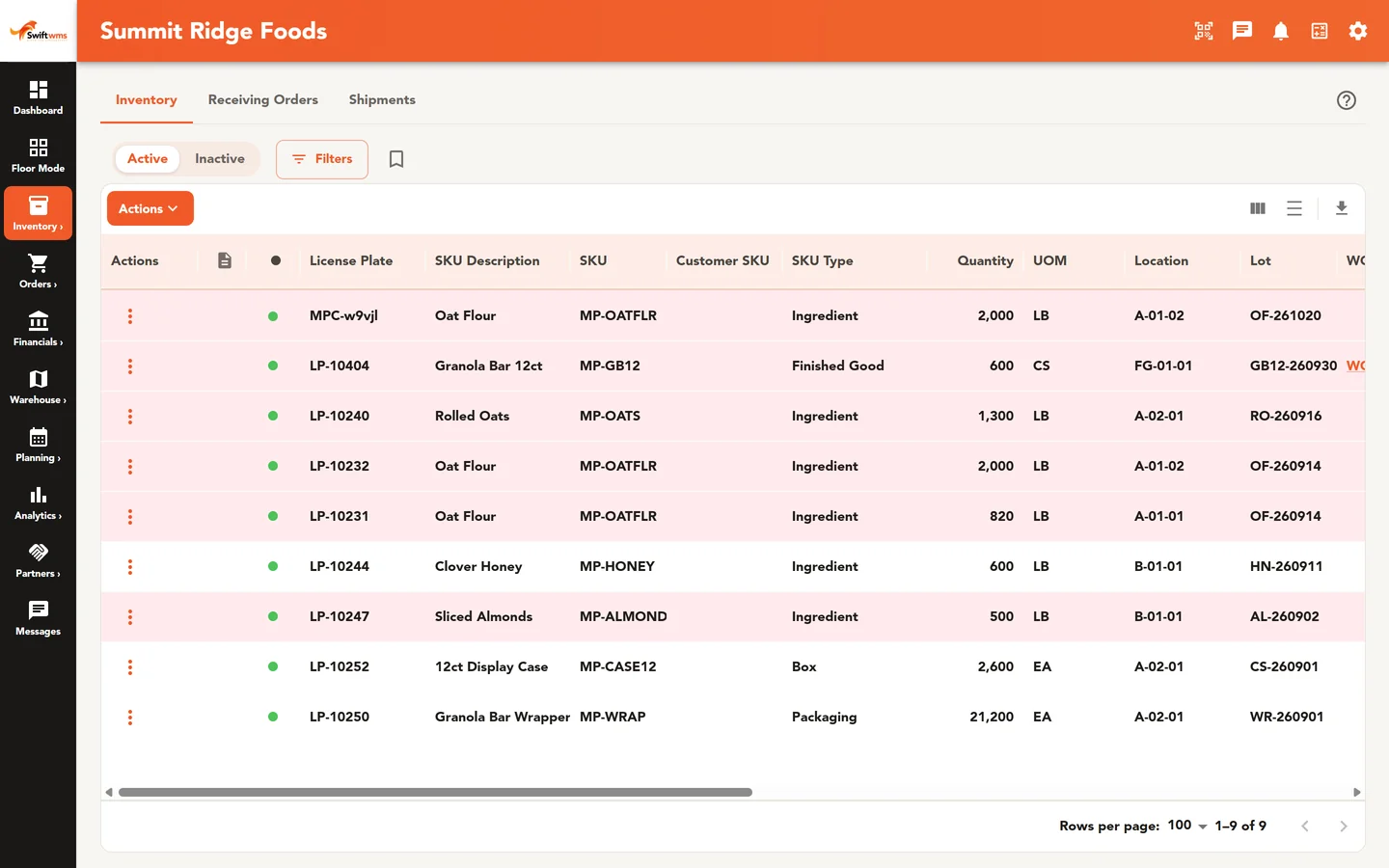
Dates only help if someone looks at them. The inventory screen has an Expiring filter for lots that expire in the next 30 days, and an On Hold filter for lots that cannot be used. Planners can pull the oldest stock first without asking anyone to build a report.
Allergens and locations
Allergen control often comes down to where things sit. Sliced almonds stored in the wrong spot are a risk, and one rushed putaway at the end of a shift can undo careful planning.
In Swift WMS you can set up allergen rules on your locations. When a receiver tries to put a SKU into a location whose allergen setup does not fit, the receipt is blocked. The check runs at the moment the plate gets its first location, which is when this kind of mistake is most likely.
This is a location check, not a full allergen program. Your team still owns cleaning, labels, line changeovers, and the rest of the plan.
Recipes, batches, and what went in
A food recipe is more than its ingredients. It is also the film, the trays, the cases, and the inclusions that go in near the end. If any of those are left out of the record, a trace has gaps.
On the Core plan, a bill of materials can list ingredients, packaging, boxes, and inclusions, and work orders use it. When your team makes a batch, it consumes specific license plates, so the record shows the exact lots used, not only the SKU. Each work order has a batch record you can read in both directions: back to the lots that went in, and forward to where the output went. See production management for how runs are set up.
Holds and QC release
A hold has to stop product, or it is only a note on a whiteboard. In Swift WMS, holds are set by lot, so every plate of that lot is covered wherever it is stored.
- A held lot cannot be shipped.
- A held lot cannot be consumed into production when lot holds are turned on in your production settings.
- New ingredient lots can go on hold automatically at receipt, so they wait for a QC review.
- Work orders have a Quality Release status, so finished product can wait for sign-off.
Production documents can also record a metal detection pass or fail for a run. Together, these give your quality team one place to see what is blocked and why.
Recall readiness
When a supplier calls about a bad lot, the first hour matters. You need to know which batches used it, which finished lots came out, and which customers received them.
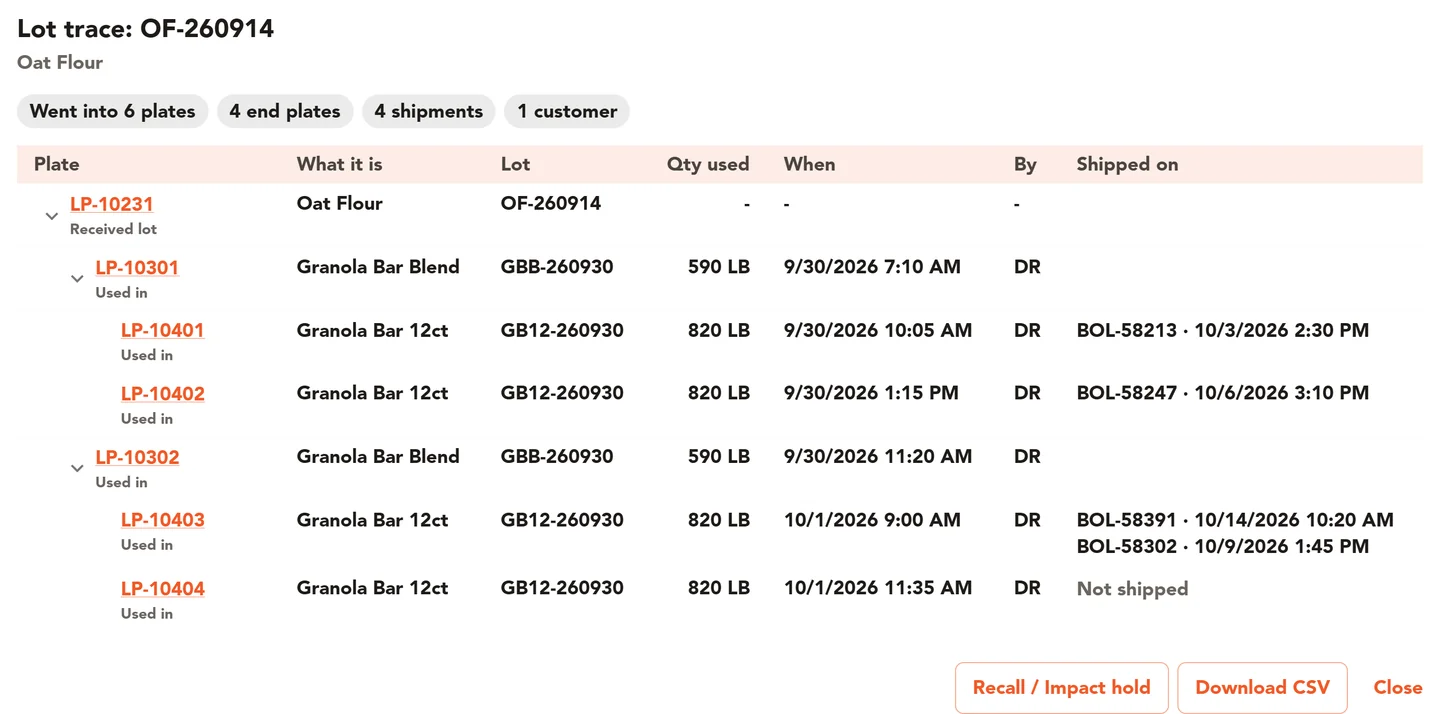
On the Core plan, Lot Trace takes a lot forward through every plate made from it and the shipments that carried those plates, with a CSV export. Recall Impact starts from the same lot and lists downstream lots, work in progress, and shipped rows by customer and order. From there you can hold every impacted lot in one step, and Recall Impact saves a recall audit record of what you found and what you held.
Practice makes the real event calmer. Our guide on how to run a mock recall covers picking a lot, tracing it, and scoring the result. The lot traceability page shows each screen in more detail. If your foods are on FDA's Food Traceability List, read our FSMA 204 explainer too.
Scheduling lines
Food plants juggle shared lines, changeovers, and equipment that needs regular care. A schedule on a whiteboard does not warn you when next week is overbooked.
The Core plan includes a Production Schedule calendar where you drag runs to new dates, and a Resource Schedule that lays work out across production lines and can suggest a schedule. Capacity Planning shows a utilization chart and a heat map, so you can spot days over capacity early. Equipment records hold maintenance schedules with checklists, plus lists of what is overdue and what is coming up.
None of this replaces your food safety plan. It gives your team cleaner records to work from. To see it with your own SKUs and lots, contact our team.
Common questions
- Does Swift WMS track expiration dates?
- Yes. When you receive an ingredient SKU, Swift WMS requires a lot name and an expiration date, so neither can be skipped at the dock. The date stays with the lot on every plate. The inventory screen has an Expiring filter that shows lots expiring in the next 30 days, so planners can use older stock first.
- How do lot holds work?
- Holds are set by lot, so they cover every plate of that lot in every location. A held lot cannot be shipped. It also cannot be consumed into production when lot holds are turned on in your production settings. You can choose to hold new ingredient lots automatically at receipt, and quality uses Release Hold when a lot is cleared.
- Can Swift WMS keep allergens apart?
- It helps at the location level. You can set allergen rules on locations, and receiving blocks a SKU from going into a location whose allergen setup does not fit. That is one check, not a full allergen program. Cleaning, labels, changeovers, and staff training are still part of your own plan.
- Is Swift WMS a food safety program?
- No. Swift WMS keeps records such as lots, holds, batch records, and traces that your food safety program can use. It does not decide what your plant must do, and it does not prove that you meet any rule. Requirements differ by product, market, and customer, so confirm your requirements with your quality team or regulator.
- Which plan has lot trace and recall impact?
- Lot Trace, Recall Impact, and the rest of Quality come with the Core plan. Core also includes work orders, bills of materials, receiving orders, and scheduling, which create most of the links a trace follows. License plates, lots, and lot holds are on every plan. Our team can help you pick the plan that fits your plant.